Xavier Remington
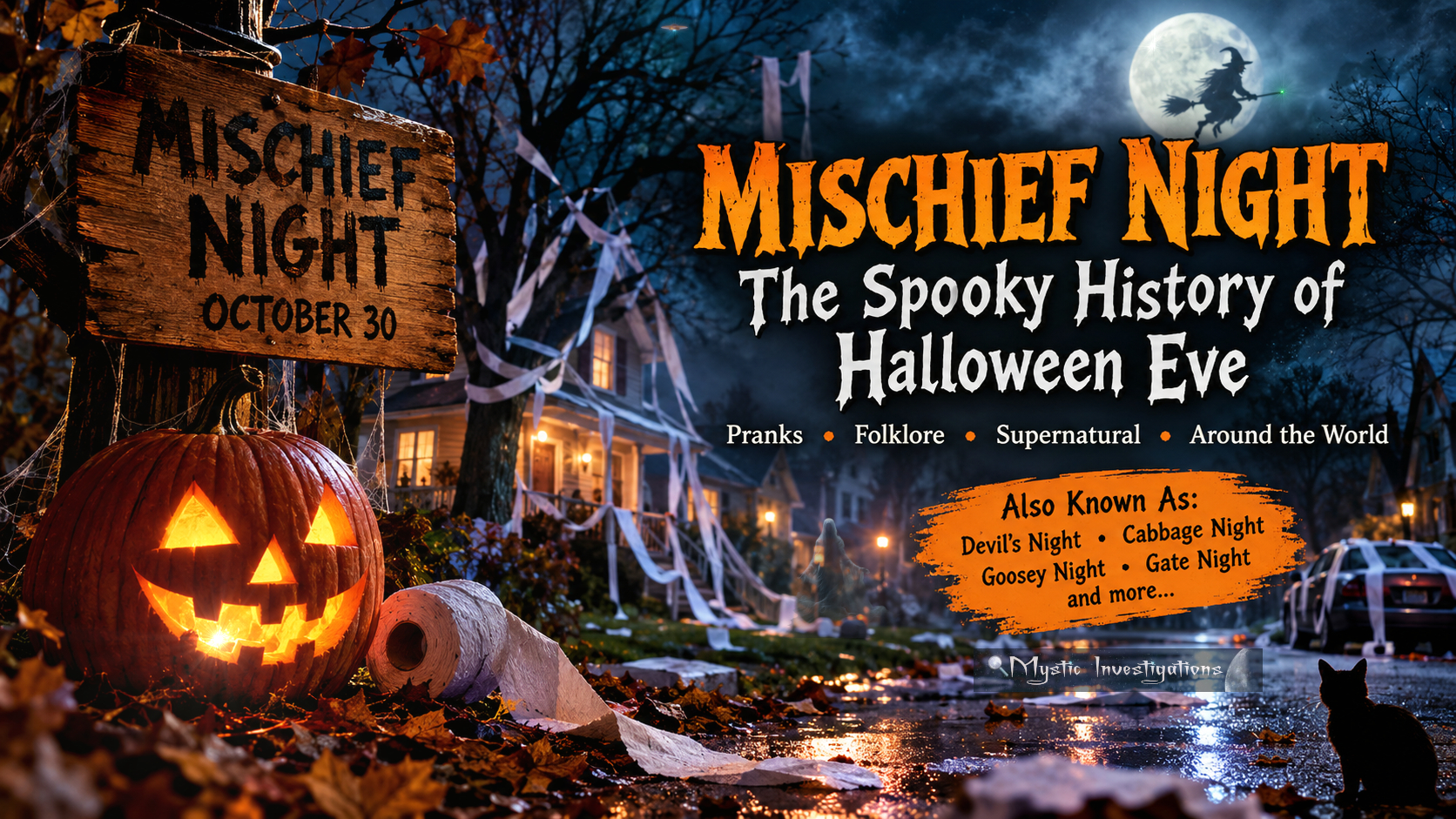
October 30th is more than just the night before Halloween in certain parts of the world. It is an unofficial holiday devoted to pranks, mischief, misbehavior, and sometimes downright supernatural mischief! Known primarily as Mischief Night, this peculiar tradition gives children, teenagers, and occasionally mischievous adults an opportunity to engage in harmless tricks before the main Halloween festivities begin. Common activities include throwing toilet paper over trees, covering cars and houses with shaving cream, soaping windows, ringing doorbells, and running away, and occasionally tossing eggs at unsuspecting homes. However, the tradition has a considerably darker history in certain communities. Some believe the evening’s association with mischief is particularly appropriate because it falls during the Halloween Season, when supernatural forces are traditionally believed to become more active.
The Ancient Supernatural Connection
Although the modern version of Mischief Night is relatively recent, its atmosphere has much older connections to European seasonal folklore. The ancient Celtic festival of Samhain marked the transition from the harvest season into winter. It was believed to be a time when the boundary separating the physical world from the supernatural realm became unusually thin. Spirits of the deceased, mischievous fairies, and other supernatural entities were thought to have greater freedom to interact with humanity. People traditionally used bonfires, protective customs, disguises, and offerings to navigate this spiritually dangerous period. While Mischief Night itself cannot be directly traced to an ancient Celtic ceremony, its modern placement immediately before Halloween puts it within a season long associated with paranormal activity.
Perhaps the pranksters of today are unknowingly continuing an ancient tradition of inviting chaos into the darkness! The Spirit Of Halloween can compel humans to actively participate in celebrating the sainted season of Samhain. Ultimately, Halloween is about achieving an annual balance between the righteous force of light and diabolical darkness. Something essential to the survival of Earth and the greater Universe at large. Having a more malicious night before the night of fun-filled trick or treating appears to be a part of that enchanted equation.
The British Origins of Mischief Night
The expression “Mischief Night” actually has documented British origins dating back centuries. One of its earliest recorded appearances was in Oxford in 1790, although the tradition itself was older. Interestingly, the original Mischief Night wasn’t necessarily associated with Halloween. In parts of England, it was traditionally observed on April 30th before May Day or Beltane, when young people celebrated the arrival of spring with practical jokes. These activities included moving objects, switching signs, overturning containers, and generally creating confusion throughout their communities. By the 19th century, Mischief Night was also associated with the evening before Guy Fawkes Night on November 5th. In some northern English communities, the tradition eventually became associated with October 30th. The idea of having an evening when ordinary rules were temporarily turned upside down proved remarkably enduring. Read The Rest Of This Story On Our Halloween Blog…🎃