
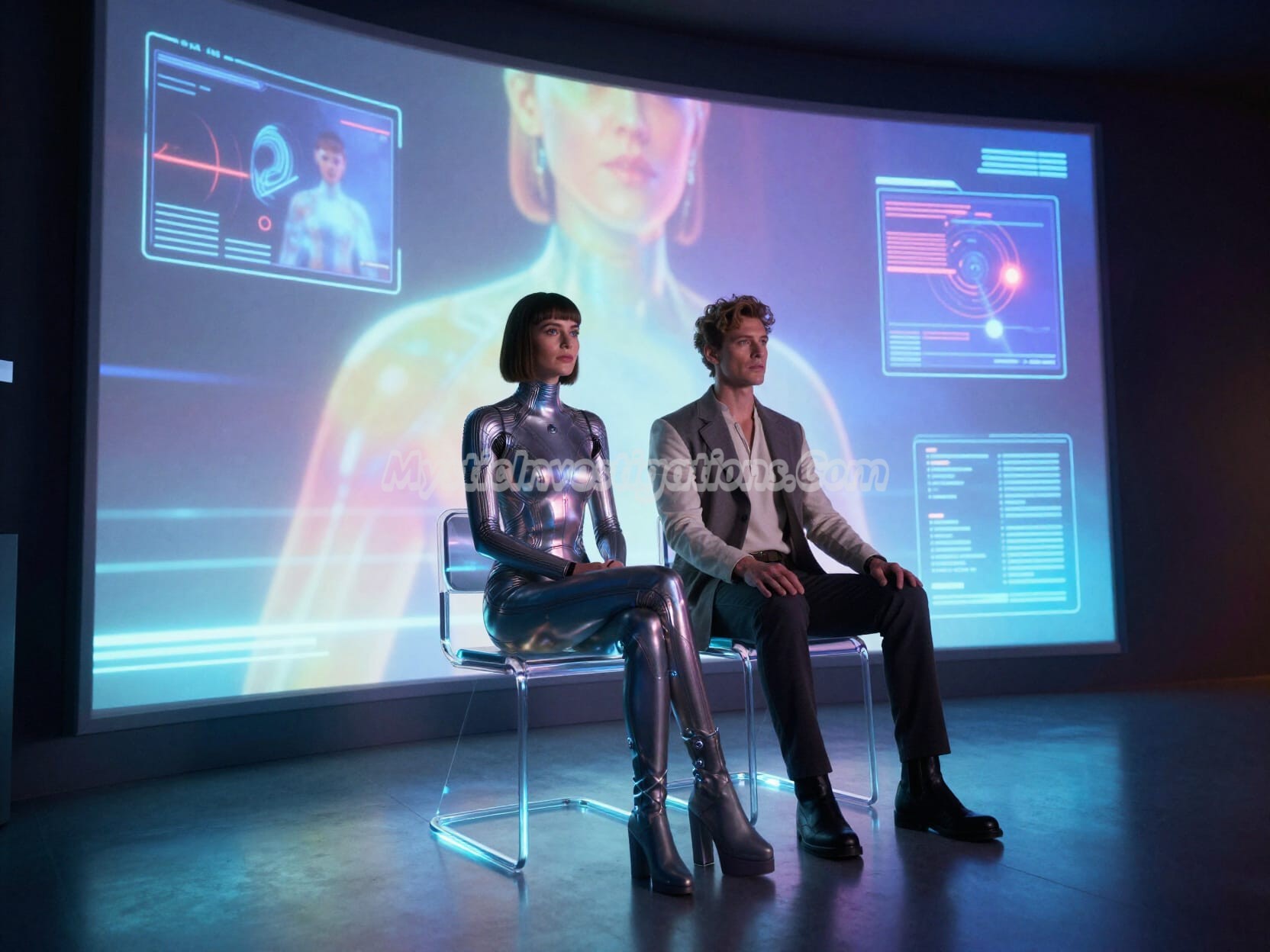
A Science Fiction Dream Becoming Reality
For decades, the idea of television programs appearing as holograms around viewers has lived firmly in the realm of science fiction. From classic sci-fi films to futuristic cartoons, audiences have imagined characters stepping off the screen and into the room, surrounding them with action, drama, or wonder. While that vision is still far from everyday reality, advances in display technology, computing power, and artificial intelligence are steadily pushing entertainment closer to immersive, three-dimensional experiences that blur the line between watching a show and being inside it.
The First Step: Headset-Based Holographic Viewing
In the near term—roughly now through the early 2030s—the closest version of “holographic TV” is arriving through mixed-reality and virtual-reality headsets. Devices such as Apple Vision Pro and Meta Quest already allow viewers to place giant virtual screens in their environment or view scenes staged within their living room. Some content is beginning to be filmed volumetrically, meaning characters and objects exist in 3D space rather than on a flat screen. Although these experiences require headsets, they represent the first practical step toward holographic entertainment and could soon become a new format for movies, sports, and serialized TV shows.
Glasses-Free 3D Displays on the Horizon
Looking further ahead, the early to mid-2030s are likely to introduce glasses-free light-field and volumetric displays for homes. These systems would still be physical displays—such as tabletop units or wall-mounted frames—but the images would appear three-dimensional and viewable from multiple angles without special eyewear. Characters might seem to emerge from the screen, creating a strong illusion of depth and presence. While this won’t yet surround an entire room, it could dramatically change how people watch live events, talk shows, and performances.

The Long Road to Room-Filling Holograms
True room-filling holographic television, where scenes are projected freely into space around the viewer with no screens or headsets, remains a longer-term possibility. Estimates place this kind of technology in the 2040s or beyond, if it becomes practical at all. Major challenges remain, including enormous data requirements, high energy use, and the difficulty of projecting stable images into open air. Early versions of this technology are more likely to appear in theme parks, research labs, or luxury installations than in typical living rooms.

Beyond Television as We Know It
Ultimately, the future of holographic TV may not resemble traditional television at all. Instead of passively watching pre-recorded shows, viewers may enter interactive, AI-driven environments where stories adapt to their presence and choices. As technology evolves, the idea of “watching TV” could transform into participating in dynamic, immersive experiences—bringing humanity closer than ever to the entertainment once imagined only in science fiction.