Xavier Remington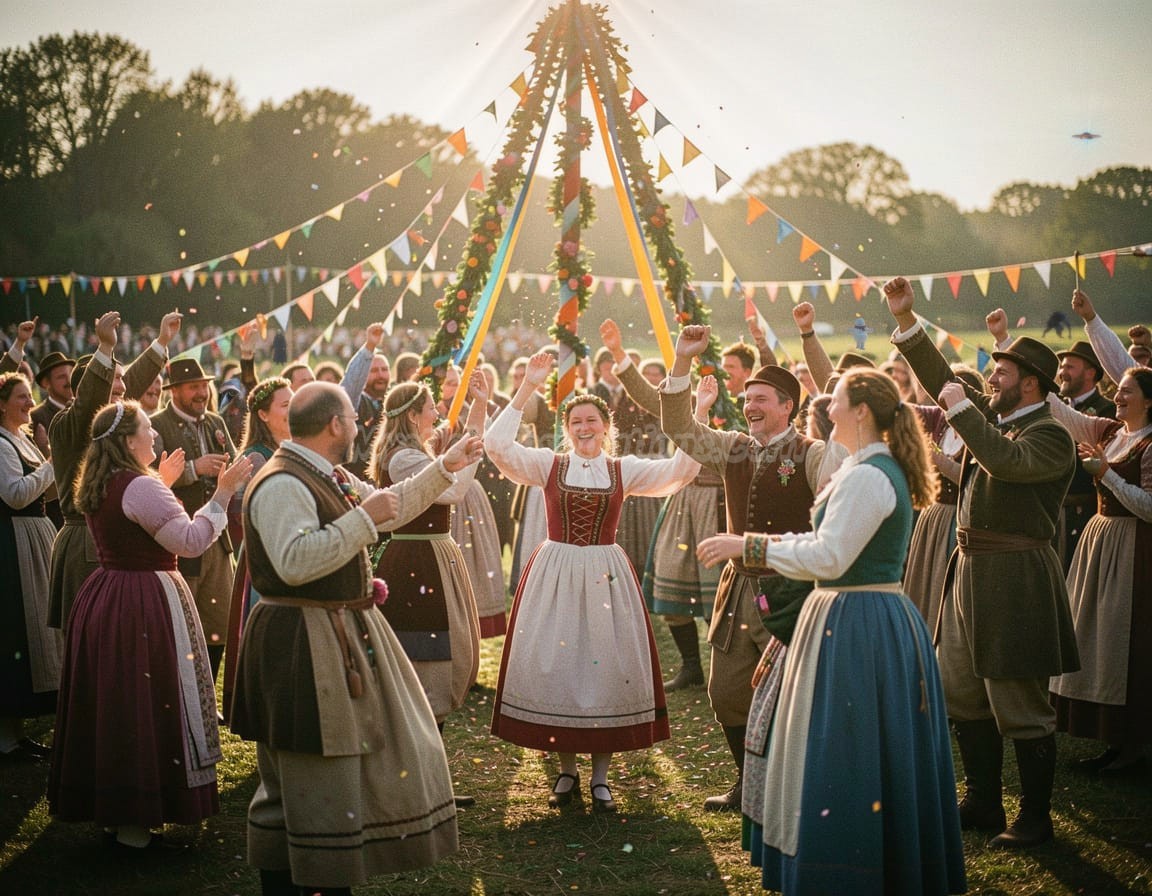
Beltane, also known as May Day, is one of the major festivals in the Wheel of the Year celebrated by Celtic pagans, Wiccans, and others drawn to nature-based spirituality. Traditionally observed on the night of April 30th in conjunction with Walpurgisnacht and the entire day of May 1st. Beltane marks the midpoint between the spring equinox and the summer solstice. From a folklore and mystical perspective, it is a time when the veil between the worlds is thinner than usual. However, not as ghostly as Samhain, but equally magical. Spirits of nature, faeries, and otherworldly beings are believed to be particularly active and accessible, inviting mortals into enchanted realms or bestowing blessings. On some occasions it may be mischievous!
The Magical Marriage Of Mother Nature
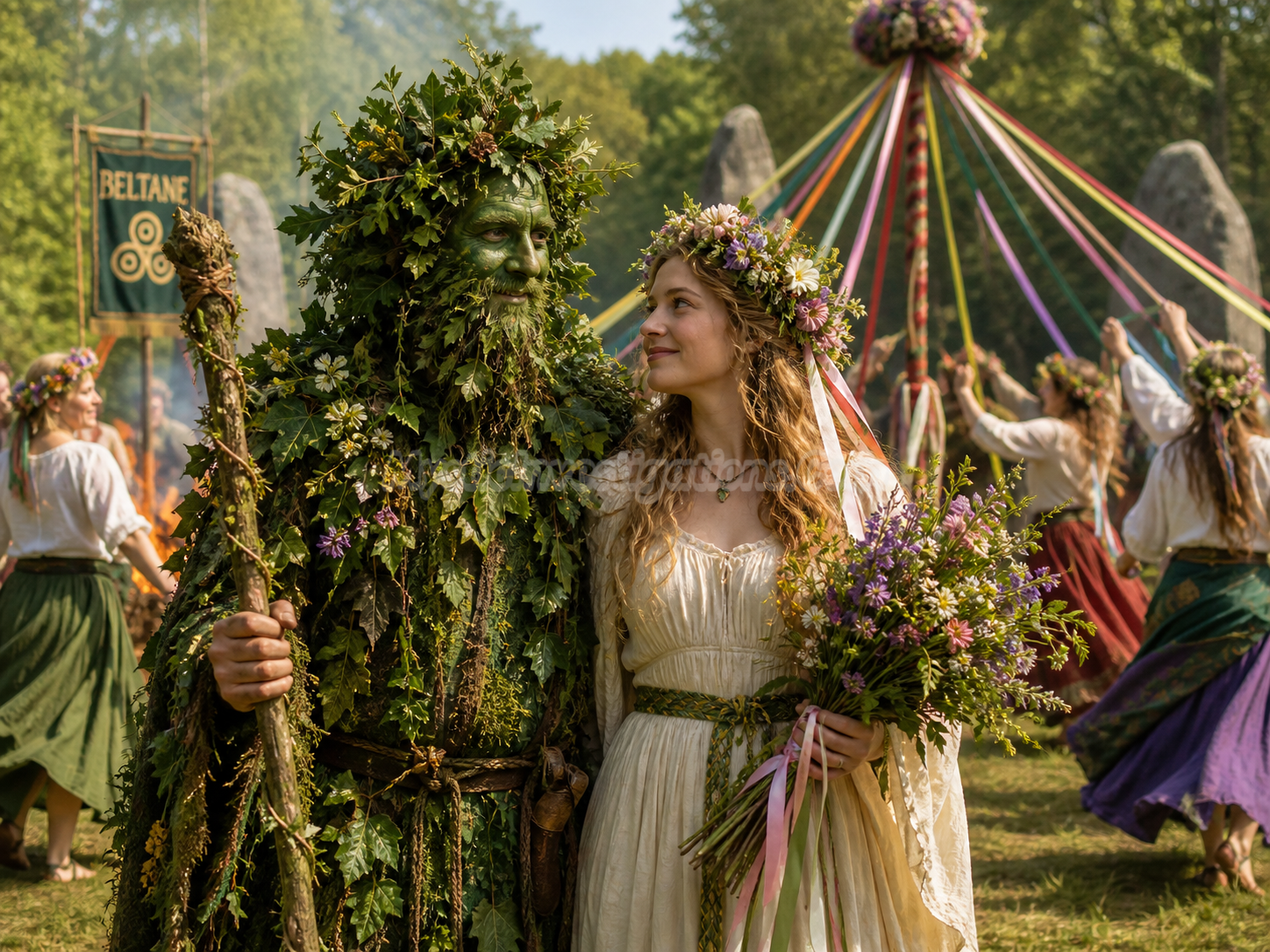
Beltane is steeped in themes of fertility, passion, and life-force energy. It celebrates the sacred union of the God and Goddess, often symbolized by the Green Man and the May Queen. This union represents the coming together of divine masculine and feminine energies, sparking the fertility of the land and the abundance of summer. Folkloric tales often depict the May Queen as a radiant maiden, a spirit of blossoming nature, while the Green Man is the wild guardian of forests and beasts. Their mythical marriage ensures the fertility of crops, animals, and people.
The Magnificent Maypole
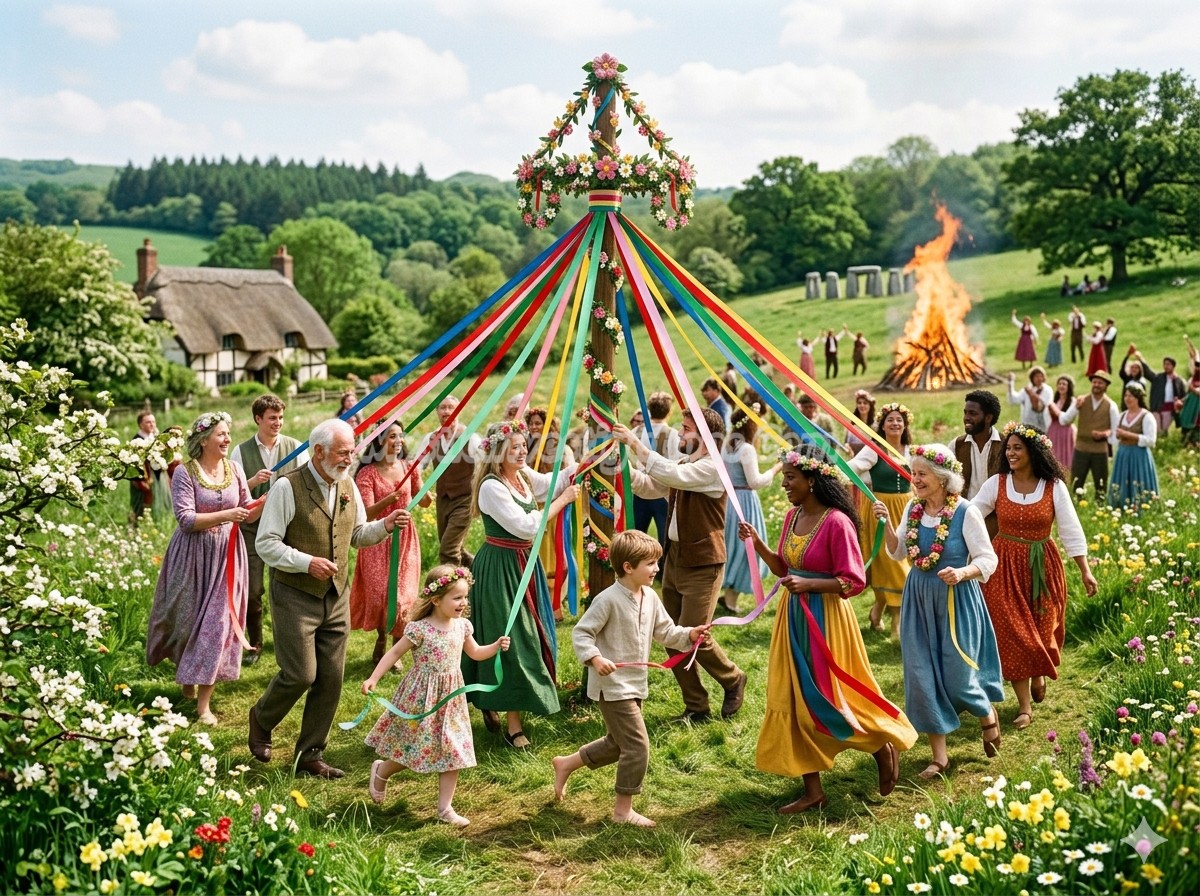
One of the most iconic symbols of Beltane is the Maypole, a tall wooden pole adorned with flowers and long ribbons. Dancers weave in and out around the Maypole, symbolically intertwining the forces of life and spirit. This ritual dance is more than mere festivity. It is a mystical act of weaving enchanted energies into hallowed harmony, reflecting ancient beliefs about cosmic order and natural balance. The circle formed by the dancers echoes the sacred wheel, the cyclical nature of time and annual renewal.
The Beltane Bonfire
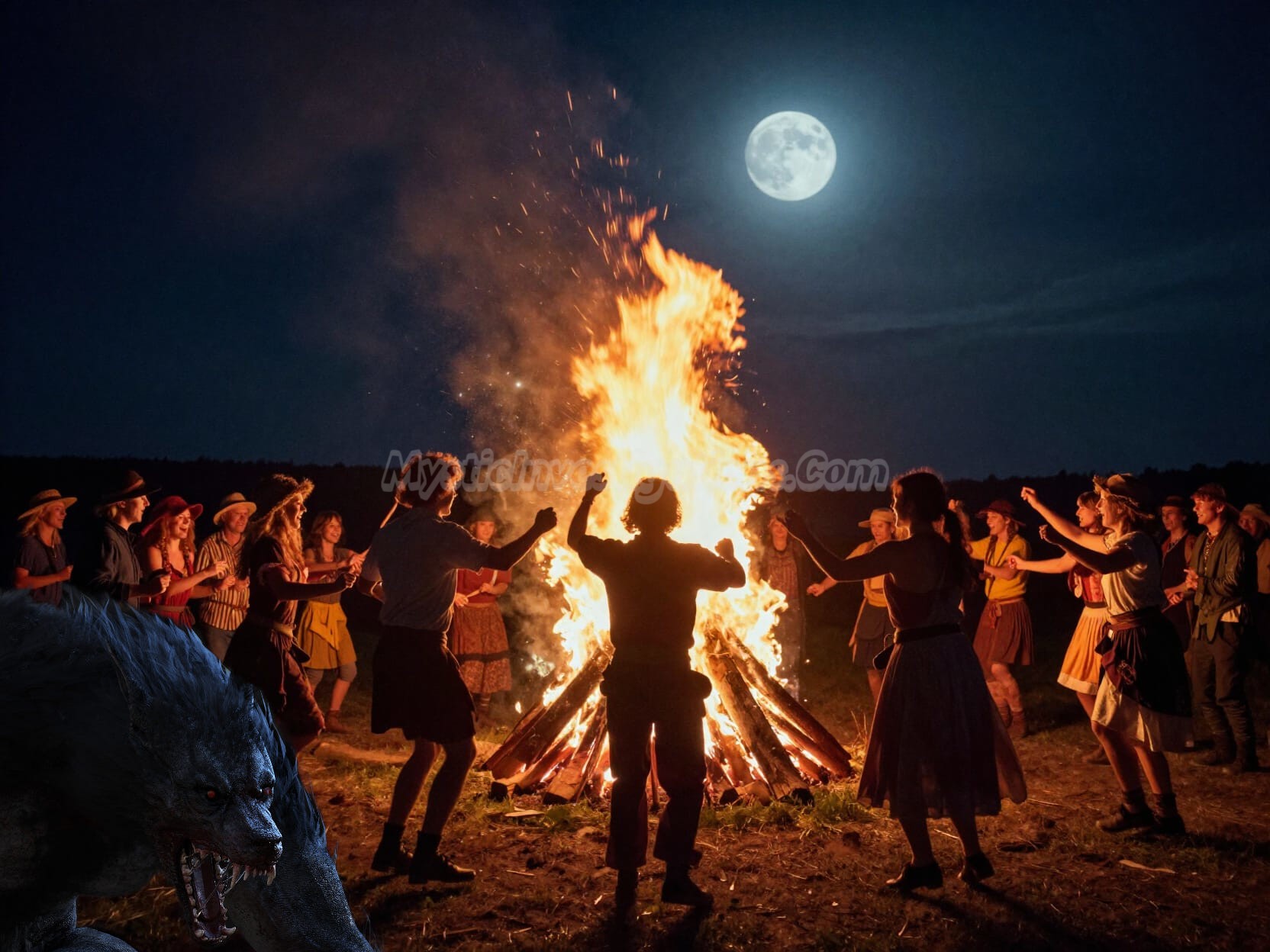
Another powerful folkloric element of Beltane is fire. Bonfires were lit on hilltops throughout the Celtic lands, believed to cleanse, protect, and bless the land and its people. Couples and livestock would leap or pass between two fires for purification and fertility. These “Beltane fires” were seen as alive with the sun’s energy, and to jump the flames was to draw down the power of the sun god into one’s own body and spirit. In some traditions, ashes from these fires were scattered on fields to ensure a fruitful harvest.
Beltane May Day Traditions
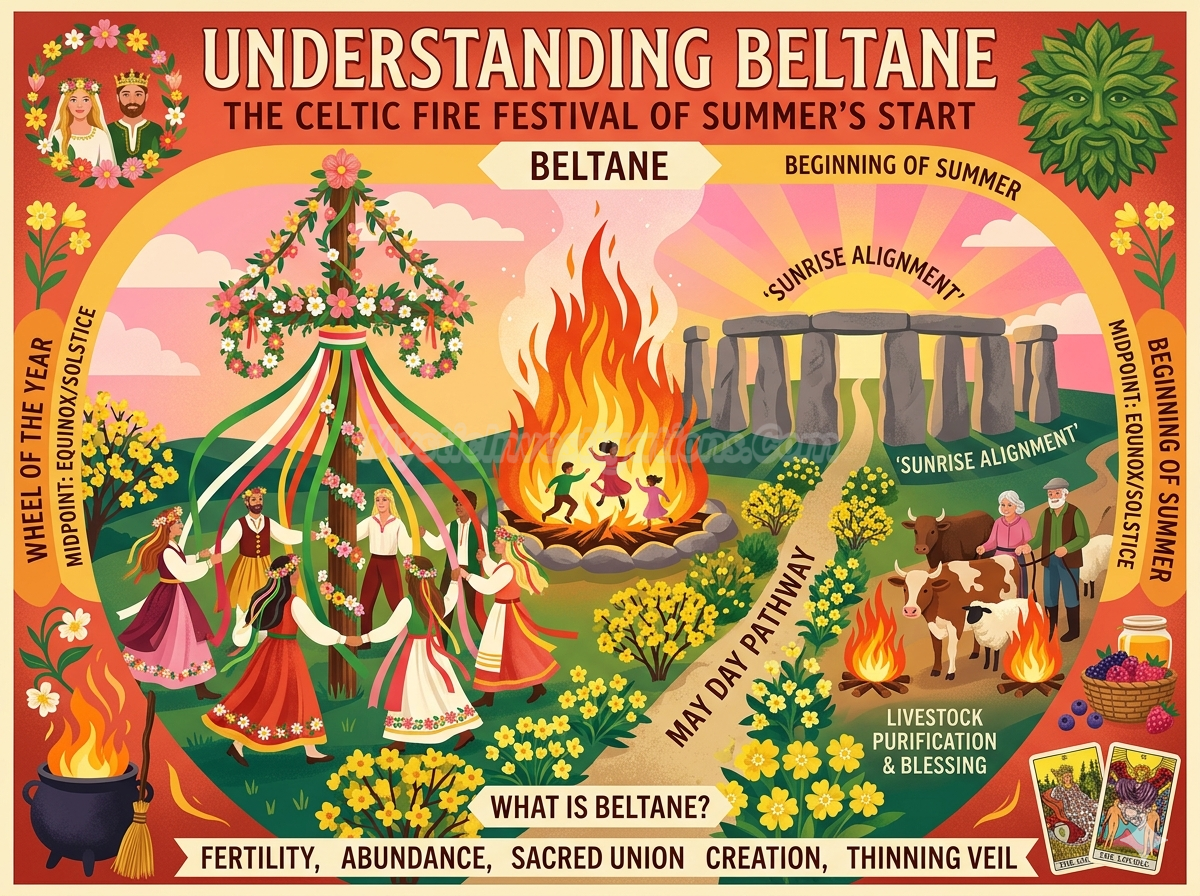
Beltane also holds the liminal quality of standing at the threshold between seasons; it is a time when boundaries blur. Folklore abounds with stories of people encountering faeries or crossing into the Otherworld during this festival. These tales serve as both warnings and invitations: those who respect the spirits and the land might be granted insight or fortune, while those who offend them risk enchantment or loss. Offerings of milk, honey, and flowers were traditionally left at sacred wells, hawthorn trees, or stone circles to honor these beings and seek their favor.
The Mystical Beltane

📝Beltane marks not only the end of the Easter Season but also the Standard Supernatural Holiday Season.🐰However, its enchanted energies metaphysically mingle with the Summer Solstice and other minor holidays, so it’s passed on to the restart of the season with Halloween.🎃