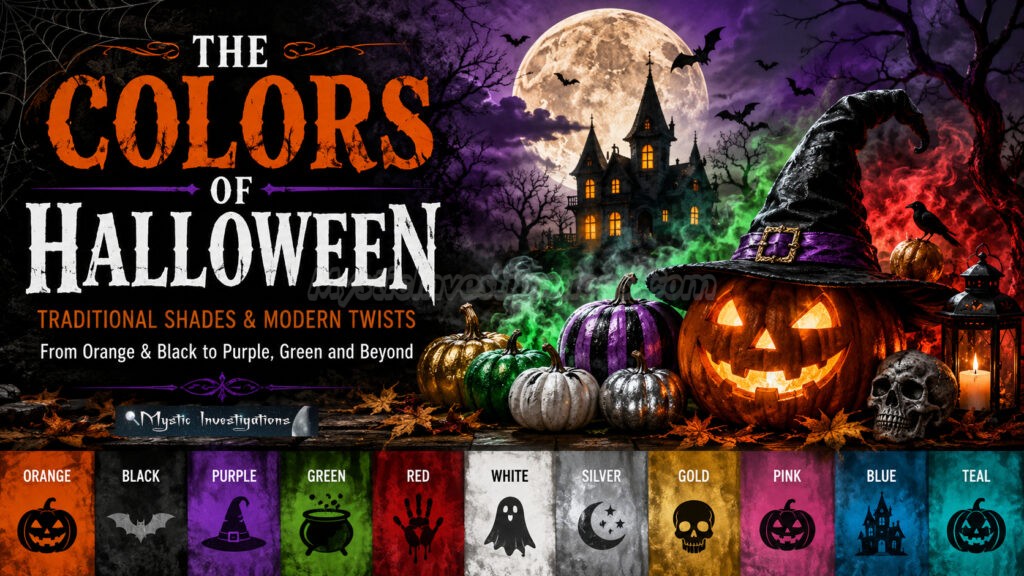
Orange: The Traditional Color of Halloween
Few colors are more closely associated with Halloween than orange. Bright, fiery, and autumnal, orange represents the changing leaves, harvest season, pumpkins, and the warm glow of a bonfire on a chilly October night. The color also provides the perfect contrast to Halloween’s other signature color, black. From pumpkins and candy wrappers to decorations and costumes, orange has become almost synonymous with Halloween itself.🎃
Black: The Color of Darkness and the Supernatural
If orange represents autumn and the harvest, black represents the darkness of Halloween. Black has long been associated with night, death, mystery, mourning, and the unknown—all themes deeply connected with Halloween. Witches’ clothing, bats, cats, haunted houses, cemeteries, and shadowy forests are commonly depicted in black. The combination of black and orange became one of the most recognizable color pairings in holiday history.
Why Orange and Black Work So Well Together
There is more to the classic Halloween color combination than tradition. Orange and black create an extremely dramatic visual contrast. Orange is bright and energetic while black is dark and mysterious. During October, the colors also mirror the natural world: brilliant orange autumn leaves stand against the darkening sky as the days grow shorter. This makes the pairing feel almost instinctively appropriate for the season.
Purple: The Color of Halloween Magic
Purple is one of the most important newer additions to the Halloween palette. While it wasn’t traditionally as prominent as orange and black, purple has become extremely popular in modern Halloween decorations. Its connection to royalty, mystery, magic, and the supernatural makes it an especially natural fit for witches, spell books, enchanted forests, and mystical creatures. Purple Halloween lights and glowing purple decorations can also create an eerie atmosphere without relying entirely on black.
Green: From Witches to Monsters
Green has also become strongly associated with Halloween, particularly through depictions of witches, monsters, potions, and supernatural creatures. The sickly green complexion traditionally given to wicked witches and malevolent monsters helped establish the color as a symbol of the strange and unnatural. Green slime, glowing potion bottles, Frankenstein’s monster, and eerie green lighting have all helped make green a recognizable Halloween color.
Red: Blood, Fire and Danger
Although red isn’t usually considered one of Halloween’s original colors, it has become increasingly common in horror-themed Halloween decorations. Red suggests blood, danger, violence, fire, and the supernatural. In particular, blood red hints at the presence of vampires. A red blood moon hanging over a haunted landscape or red lighting illuminating a supposedly abandoned building can immediately make a Halloween scene feel more threatening. Horror attractions especially make frequent use of red to create an atmosphere of danger.
White: Ghosts and the Otherworldly
White may seem like an unusual Halloween color, but it has an important place in the holiday’s imagery. White is associated with ghosts, skeletons, spirits, fog, moonlight, and things that seem to exist between the worlds of the living and the dead. A white sheet ghost is perhaps one of the simplest and most recognizable Halloween images. White also provides another dramatic contrast with black, particularly in skeleton decorations and haunted-house displays.
Silver: Moonlight and the Supernatural
Silver has emerged as a stylish modern Halloween color, particularly in more sophisticated or gothic decorations. Its association with moonlight gives it a naturally supernatural quality. Silver can also suggest ancient treasures, magical objects, enchanted weapons, and the mysterious glow of a full moon. The Moon that gives us the wayward werewolf and the silver bullet that repels it! Metallic silver decorations are increasingly used alongside black and purple to give Halloween displays a more elegant appearance.
Gold: A More Elegant Halloween
Gold isn’t traditionally associated with Halloween, but it has become popular in upscale and glamorous Halloween decorating. Gold can represent autumn’s abundance, treasure, magic, and the supernatural. When combined with black, it creates a sophisticated Halloween aesthetic rather than the bright, playful appearance associated with orange and traditional decorations. Gold pumpkins, skulls, candles, and lettering are particularly popular in elegant Halloween displays.
Pink: The Rise of the Playful Halloween
Pink is one of the more surprising newer Halloween colors. Modern Halloween has increasingly expanded beyond traditional horror imagery, creating room for cute, glamorous, and whimsical interpretations of the holiday. Pink Halloween decorations can transform pumpkins, ghosts, witches, and skeletons into something playful rather than frightening. Pastel pink has become particularly popular in social-media-inspired Halloween decorating.
Blue: An Unexpected Halloween Color
Blue has also found a place in contemporary Halloween design. Deep midnight blue can evoke the night sky, while electric blue can give haunted houses and supernatural scenes an otherworldly appearance. Blue lighting is particularly effective when combined with fog, skeletons, ghosts, and abandoned landscapes. Some modern Halloween displays use blue as an alternative to the more traditional purple or green glow.
Neon Colors: Halloween Goes Electric
Modern Halloween has embraced neon colors in a way that would have been difficult to imagine in earlier generations. Neon green, electric purple, bright orange, hot pink, and fluorescent blue are now common in Halloween parties, costumes, decorations, and haunted attractions. Blacklight effects have made these colors especially popular because fluorescent materials can appear to glow against a dark background.
Teal: The Color of a Different Kind of Halloween
Teal has gained a particularly important modern association with Halloween through the Teal Pumpkin Project. Teal-colored pumpkins are used to indicate homes offering non-food treats or allergy-friendly alternatives to traditional Halloween candy. As a result, teal has developed a meaning beyond decoration, becoming associated with inclusion and making trick-or-treating accessible to children with food allergies.
The Growing Halloween Rainbow
One of the biggest changes in Halloween decoration is that there is no longer a strict Halloween color palette. Traditional orange and black remain dominant, but purple, green, red, white, silver, gold, blue, pink, and teal have all found their own places in modern Halloween culture. This expanding palette reflects the holiday itself, which has grown from a night associated primarily with ghosts, spirits, and the supernatural into a celebration encompassing horror, fantasy, humor, creativity, and pop culture.
Orange and Black Will Always Be Halloween
Despite all these newer colors, orange and black remain the undisputed classic Halloween combination. Orange connects Halloween to pumpkins, autumn, harvests, and falling leaves, while black represents darkness, mystery, death, and the supernatural. Together they capture the strange duality of Halloween: the warmth and celebration of the harvest season combined with the darkness and mystery of the night.
The Future Colors of Halloween
Halloween has always evolved with the times, and its colors are evolving along with it. Traditionalists may continue to decorate with orange and black, while others may prefer gothic black and silver, mystical purple and green, elegant black and gold, or even playful pink and pastel Halloween decorations. There may never be an official set of Halloween colors—and that’s part of what makes the holiday so visually fascinating. Halloween belongs to the darkness, the autumn leaves, the moonlight, the supernatural, and the imagination, giving virtually every color a chance to become a little spooky.👻

🎃Find Your Favorite Colors Among The Many Selections Of Halloween Decorations…[Amazon Ad]