The Night When Shadows Rule the Season
Krampusnacht, or Anti-Saint Nicholas Day, is observed on the evening of December 5, has long been regarded as the most fear-soaked night of the holiday season. While December 6 Saint Nicholas Day celebrates generosity and virtue, the preceding evening belongs to something far older and far more sinister. It is the night when Krampus, the legendary Christmas demon, walks the Earth. To some, he is simply a relic of Alpine folklore. But to those who study the paranormal forces woven throughout human history, Krampus is no myth but rather a living embodiment of winter’s darkest power.
Ancient Roots in Pagan Winter Rituals
The origins of Krampus stretch back long before Christianity shaped European winter traditions. Ancient Germanic and Alpine tribes told stories of malevolent spirits that prowled the deep forests during the long, starving nights of early winter. Among these spirits was a horned, cloven-hoofed monster who punished the wicked and dragged the corrupt into the unforgiving wilderness. As Christianity spread across these lands, the Church found it easier to adopt elements of the old customs rather than erase them. Thus, Krampus was bound symbolically and, some believe, supernaturally to the holiday of Saint Nicholas, becoming the dark counterpart to the season’s patron of kindness.
The Monstrous Form of the Christmas Demon
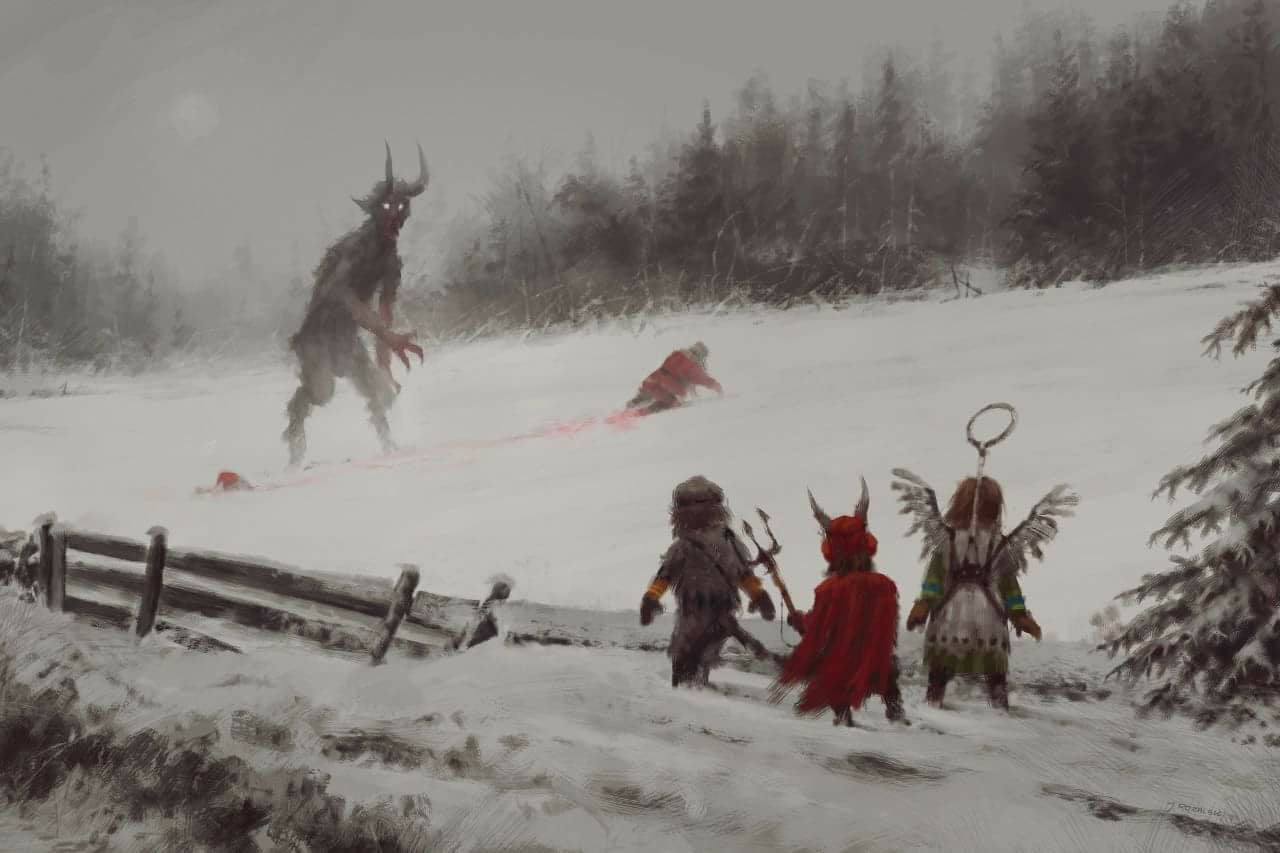
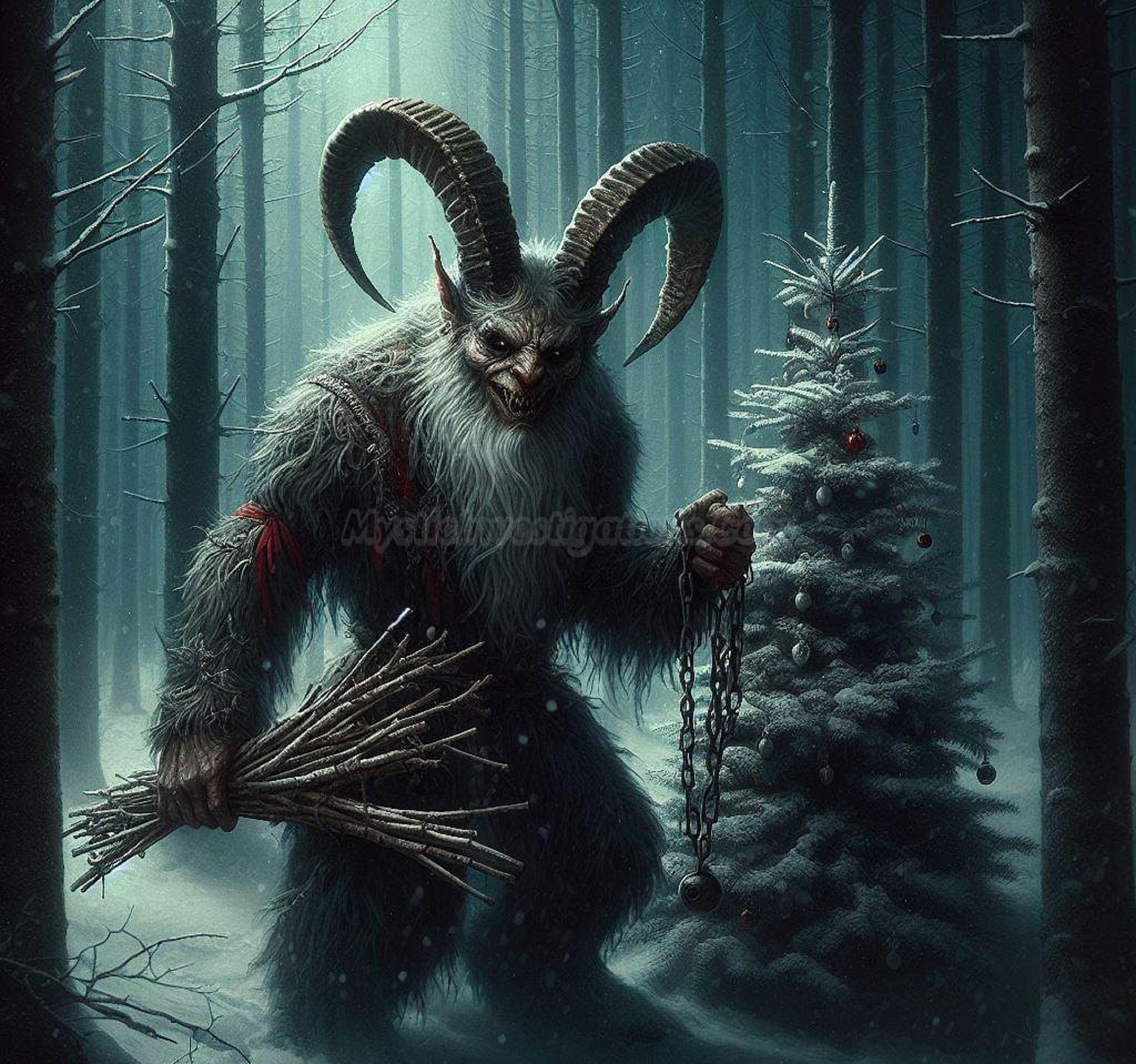
In traditional depictions, Krampus is truly horrifying: a towering figure with curling horns, matted fur, razor-sharp claws, and a serpentine tongue. He carries heavy chains that clatter ominously in the cold night, along with birch switches used to lash the misbehaving. According to ancient accounts, these are not merely tools of punishment—they are instruments of harvesting fear. For Krampus, fear is sustenance. In the most chilling tellings, he stuffs wrongdoers into a woven sack, carrying them back to his shadowy lair or even dragging them down into a hellish realm that predates modern conceptions of damnation.
A Night When the Veil Between Worlds Thins
While modern celebrations in Europe often portray Krampus as a mischievous festival mascot, the supernatural perspective is far darker. Krampusnacht is believed to be the one night of the year when this infernal entity’s power swells, allowing him easier passage into our world. Paranormal researchers suggest that the emotional energy surrounding the holiday season—the joy, stress, guilt, and anticipation—creates a powerful atmospheric charge. This psychic turbulence thins the veil between realms, enabling beings like Krampus to manifest more fully. Tales of rattling chains outside windows, sudden freezing drafts indoors, and unexplained claw marks on frosted glass endure for a reason.

The True Targets of Krampus’s Wrath
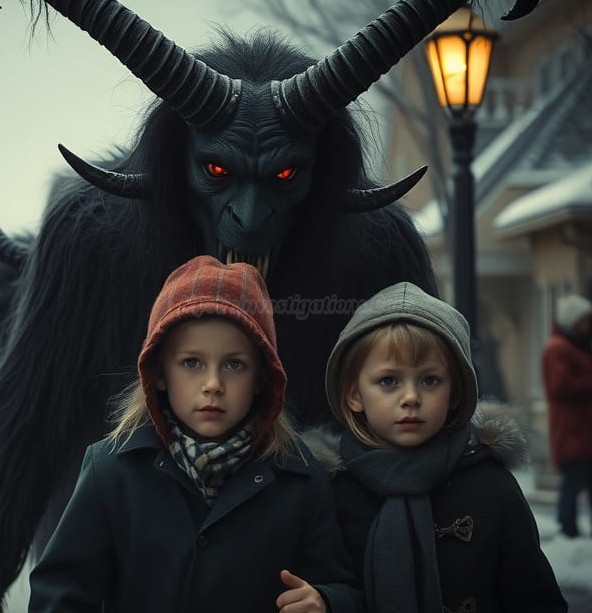
Mythological interpretation traditionally focuses on Krampus targeting naughty children, but deeper esoteric lore claims his true prey is broader: the morally corrupt, the cruel-hearted, and those who knowingly spread malice. Innocent children are said to possess natural spiritual protections—purity of heart acts like a shield. Adults, however, are more vulnerable. Acts of cruelty, selfishness, or intentional wrongdoing generate what occult scholars call moral residue, a dark aura Krampus can detect across great distances. On Krampusnacht, such individuals may feel an unshakable sense of being watched or hear faint clattering sounds with no discernible source.

The Eternal Duel Between Light and Darkness
This interpretation casts Krampusnacht as a cosmic balancing point—a night where the forces of light and darkness draw battle lines. Saint Nicholas represents charity, compassion, and guidance. Krampus embodies consequence, retribution, and shadow. The coexistence of these two figures reflects a truth deeply embedded in human culture: goodness does not erase darkness; it lives alongside it, defining it, restraining it, and sometimes challenging it. In this sense, Krampus is not merely a punisher but a reminder that morality is not seasonal—it is a year-round burden carried by every soul.

Why Krampus Endures in the Modern World
The endurance of Krampus in global culture speaks to the power of this duality. Even as Christmas grew more commercialized, sanitized, and wrapped in glittering lights, Krampus refused to fade from collective memory. Dark myths, after all, do not disappear—they adapt. In many places, families still leave offerings on Krampusnacht, not out of festive cheer, but out of caution. A lit candle in the window. A lock firmly bolted. A prayer whispered just before sleep.

A Warning for the Coming Winter Night
If we accept for a moment that Krampus is real—not symbolic, not folkloric, but a genuine supernatural entity—then Krampusnacht becomes more than a cultural tradition. It becomes a warning. When the cold of early December settles in and the nights reach their deepest darkness, the ancient horned terror stirs. He listens for the whispers of guilt. He follows trails of wickedness like a bloodhound of the damned. And when he finds what he seeks, he steps through the thinning veil to claim his due.

Heed the Old Wisdom of Krampusnacht
This winter, as Krampusnacht approaches, consider the old wisdom passed down from firelit Alpine cabins: keep your conscience clear, your heart kind, and your home warm with good intentions. For in the deep silence of a December night, the distant rattle of chains may be more than imagination—it may be Krampus drawing near…😈